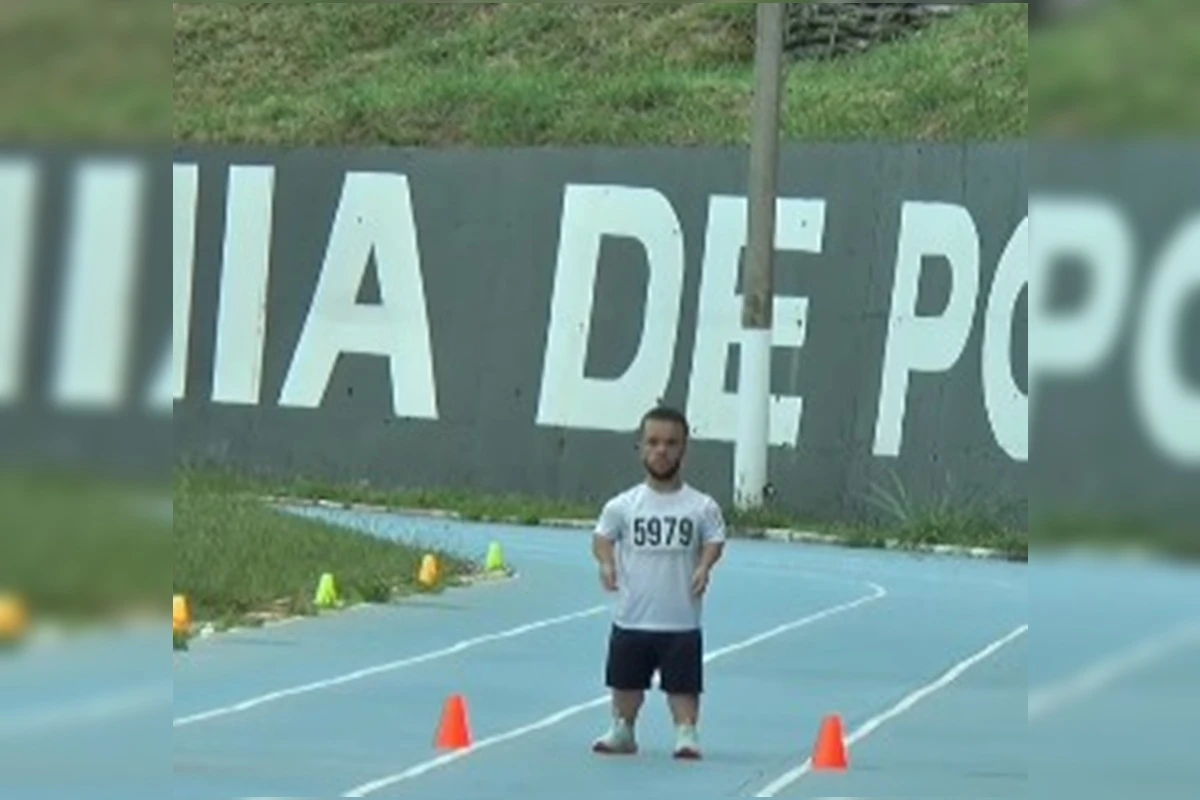
Dwarfism and PCMG Delegate TAF: Discrimination Claims Spark Debate
The journey to fulfilling a lifelong dream often involves overcoming significant hurdles. For Matheus Menezes, a 25-year-old law graduate from Goiás, his aspiration to become a *delegado* (civil police delegate) in Minas Gerais has become a poignant symbol of the ongoing struggle for disability rights in Brazil's public service examinations. Having successfully navigated numerous academic and theoretical stages of the highly competitive Police Civil de Minas Gerais (PCMG) selection process, Menezes, who has dwarfism, found his path abruptly halted at the Physical Aptitude Test (TAF). His story has ignited a critical debate about systemic discrimination and the imperative for reasonable accommodation for candidates with disabilities.
Menezes's experience at the PCMG TAF, where he was allegedly eliminated due to an unadapted horizontal jump test, highlights a critical intersection of ambition, legal rights, and institutional responsibility. Despite explicit requests for adaptations to accommodate his condition, the organizing body, FGV, reportedly remained "omissive and inert." This incident raises serious questions about the adherence to legal protections for people with disabilities (PCD) and the true meaning of equal opportunity in high-stakes public competitions. As the narrative unfolds, it underscores not just one individual's fight but a broader call for inclusive practices that genuinely reflect the diverse capabilities of all citizens aspiring to serve.
The Dream Deferred: Matheus Menezes's Journey to Become a PCMG Delegate
Matheus Menezes embarked on his legal studies in 2019 with an unwavering goal: to join the ranks of the Polícia Civil as a *delegado*. This wasn't merely a career choice but a deep-seated ambition, a "plan A" with no conceivable "plan B." Throughout his academic journey and beyond, Matheus faced not only the rigors of legal education but also the pervasive prejudice often directed at individuals with dwarfism. He recounts instances where his aspirations were met with laughter and derision, with many asserting he lacked the "size or competence" for such a demanding role. Yet, fueled by faith and an indomitable spirit, he pressed onward, determined to defy expectations and prove his detractors wrong.
His dedication bore fruit as Matheus conquered the initial academic hurdles of the PCMG delegate examination. He successfully passed the demanding objective first phase, demonstrated his legal acumen in the discursive written examination, and showcased his communication skills during the oral examination. These achievements, particularly in a contest renowned for its difficulty, were testaments to his intellectual capability and unwavering commitment. His triumph through these stages underscored his undeniable qualification for the theoretical aspects of the role, bringing him tantalizingly close to realizing his dream. However, the subsequent physical evaluation would present an unforeseen, and arguably unfair, barrier. For more insights into how such dreams can be unexpectedly halted, read
Delegate Dream Halted: Man with Dwarfism Fights TAF Discrimination.
A Hurdle Too High: The TAF Discrimination Claims
The turning point in Matheus Menezes's pursuit of becoming a *delegado* in Minas Gerais arrived with the Teste de Aptidão Física (TAF). Aware of the physical demands and his unique physiological attributes, Matheus proactively sought reasonable accommodation. Prior to the TAF, he submitted an administrative request to the organizing body, FGV, for adaptations to the physical tests, specifically citing his condition of dwarfism. Brazilian law, like many international statutes, provides for the rights of persons with disabilities, often necessitating adjustments to ensure equitable participation in public contests. Yet, according to Menezes, his request was met with silence. The FGV, he states, remained "omissive and inert," failing to uphold the legal rights afforded to individuals with disabilities.
Consequently, Matheus was compelled to undertake the TAF under the same conditions as all other candidates, without any modifications. The elimination occurred during the horizontal jump test, which reportedly required a minimum leap of 1.65 meters – a standard that, for someone with dwarfism, presents an insurmountable physical barrier. Matheus passionately argues that this lack of adaptation not only violated principles of equality and fairness but also directly contravened the spirit and letter of the Constitution and specific legislation designed to protect people with disabilities. He highlights that such rigid, unadapted testing essentially creates an impossible hurdle, denying qualified candidates like himself a fair chance to demonstrate their abilities relevant to the role's actual duties, rather than arbitrary physical benchmarks. This incident resonates with broader concerns about PCMG delegate TAF procedures; explore further at
PCMG Delegate TAF: Disability Rights Denied to Candidate with Dwarfism.
Navigating Disability Rights in Public Service Exams
The case of Matheus Menezes spotlights a critical challenge within public service examinations globally: how to balance the need for qualified candidates with the imperative to ensure inclusive and non-discriminatory selection processes for individuals with disabilities. Legal frameworks in many countries, including Brazil, aim to guarantee equal opportunities for people with disabilities (PCD), often through provisions for "reasonable accommodation." This principle dictates that employers and examining bodies must make necessary and appropriate modifications and adjustments, without imposing a disproportionate or undue burden, to ensure that persons with disabilities can enjoy or exercise all human rights and fundamental freedoms on an equal basis with others.
In the context of physical aptitude tests for roles like a *delegado* in the *Polícia Civil de Minas Gerais*, reasonable accommodation could involve:
- Individualized Assessment: Instead of a one-size-fits-all approach, evaluating the candidate's functional capacity in relation to the essential duties of the job, rather than strict adherence to standardized physical metrics.
- Adapted Tests: Modifying physical tests to accommodate specific disabilities, ensuring they still measure the underlying physical attributes necessary for the job without creating inherent disadvantages.
- Alternative Tests: Offering alternative forms of assessment that measure the same competencies in a different, accessible way.
- Expert Consultation: Engaging medical and disability experts to advise on appropriate adaptations and to ensure fairness and safety.
The current situation, where a candidate with dwarfism, a form of *nanismo*, is eliminated from a *delegado* position in *Minas* due to an unadapted test, calls into question the commitment of institutions like PCMG and their organizing partners (like FGV) to these fundamental rights. It also highlights the crucial role of judicial review and legal advocacy in upholding these protections when administrative appeals fail. Matheus Menezes's resolve not to give up on his dream underscores the importance of this fight for not just himself, but for countless other individuals with disabilities seeking fair access to public service careers.
Recommendations for Inclusive Recruitment and Fair Assessment
The controversy surrounding Matheus Menezes's TAF experience offers a valuable opportunity for introspection and improvement within public service recruitment. To ensure that future selection processes are truly inclusive and legally compliant, several actionable recommendations can be considered:
- Proactive Policy Development: Examining bodies should develop and publicly disseminate clear, comprehensive policies regarding reasonable accommodation for candidates with disabilities well in advance of any examination.
- Training and Awareness: Staff involved in exam organization and execution, particularly TAF administrators, must receive mandatory training on disability rights, the concept of reasonable accommodation, and practical guidance on implementing adaptations.
- Transparent Communication Channels: Establish clear, accessible, and responsive channels for candidates with disabilities to request and discuss accommodations. Silence or inaction, as reported by Matheus, is unacceptable.
- Regular Review and Consultation: Periodically review TAF protocols in consultation with disability advocacy groups, medical professionals, and legal experts to ensure tests are job-relevant and designed to be as inclusive as possible.
- Focus on Functional Equivalence: Emphasize measuring the *functional equivalence* of a physical ability required for the job, rather than rigid, universal physical standards that may disproportionately disadvantage certain groups. For example, if a job requires reaching a certain height, the question should be whether the candidate can perform that task with or without reasonable assistance, not solely on natural vertical leap.
By adopting such measures, institutions can move beyond mere compliance to genuinely foster an environment of equal opportunity, ensuring that talent and dedication are the true determinants of success, irrespective of physical differences.
Conclusion: A Call for True Equality in Public Service
Matheus Menezes's unwavering pursuit of becoming a *delegado* in the *Polícia Civil de Minas Gerais*, despite facing physical barriers and institutional inertia, is a powerful testament to human resilience. His story, deeply rooted in the concept of *nanismo delegado minas*, is more than an individual grievance; it's a clarion call for a fundamental re-evaluation of how public service examinations are conducted. The alleged discrimination at the PCMG TAF underscores a critical need for institutions to not only acknowledge but actively uphold the rights of persons with disabilities, transforming legal provisions into tangible, fair opportunities. As Matheus courageously continues his fight, his experience serves as a vital reminder that true equality means removing arbitrary barriers and ensuring that all qualified candidates, regardless of their physical condition, have an equitable chance to contribute their skills and passion to public service. His struggle paves the way for a more inclusive and just future, where dreams are measured by competence and commitment, not by unadapted physical standards.